Basementmold growth accelerates when relative humidity exceeds 55%, fostering fungal colonies that compromise air quality and structural integrity. In this guide, you’ll learnhow to identify moldcauses, control moisture, apply interior and exterior waterproofingmethods, and maintain a dry, mold-free basementover the long term. By mastering these strategies, you can protect your home and healthfrom the silent threat lurking below grade.
What Causes Mold Growth in Basements and How Can You Identify It?
Mold growth in basements occurs when moisture meets organic surfaces, allowing spores to germinate and spread, which leads to healthrisks and material decay. Understanding this mechanism empowers proactive detection and remediation.
Moldthrives in damp environments, and its spores can cause various healthissues. Exposure can lead to allergic reactions, asthmaattacks, and irritation of the eyes, skin, nose, throat, and lungs. The U.S. Environmental Protection Agency advises that moldsare generally not a problem indoors unless they find wet or damp spots to grow.
Why Does Mold Thrive in Basement Environments?
Basementenvironments typically remain cool, dark, and poorly ventilated, creating ideal conditions for moldto flourish. High humidity levels, condensationon cold concretewalls, and organic debris such as woodand cardboard provide both moisture and food sources.
These factors combine to sustain fungal growth and undermine air quality. Exploring moisture control methods will reveal how managing humidity directly disrupts this lifecycle and prevents outbreaks.
Common basementmoldsvary in toxicity and appearance, each posing distinct healthconcerns and structural impacts.
Stachybotrys chartarum: health risks include pulmonary (respiratory irritation, chronic fatigue. Appears dark green/black with a slimy texture.
Aspergillus: health risks include asthma exacerbation, allergic reactions. Appears as powdery colonies in yellow/green.
Penicillium: health risks include respiratory infections, sinusitis. Appears blue-green with velvety patches.
- Cladosporium: health risks include skin irritation, bronchitis. Appears Olive-green to black and suede-like.
Each moldspeciesreleases spores that can trigger allergic symptoms or more severe respiratory issues. Identifying moldtypes helps target the appropriate remediation strategy.
How Can You Detect Mold in Your Basement?
Detecting moldearly requires observing visual cues, musty odors, and healthsymptoms among occupants.
- Inspect for dark stainingor fuzzy growth on walls, floors, or stored items.
- Notice persistent damp, earthy smells when humidity climbs.
- Track allergic reactions like sneezing or coughing that worsen indoors.
Consistent monitoring of these signs enables swift intervention before extensive colonization develops and spreads to living areas.
Moisture Control Prevent Mold Growth
Moisture control prevents moldby interrupting the watercycle that sustains fungal spores, thereby maintaining surfaces below critical dew points and inhibiting colony formation.
Dehumidifiers extract excess moisture from basementair, while ventilation exchanges humid interior air with drier outdoor air to maintain optimal relative humidity below 50%.
- RefrigerantDehumidifiersremove moisture through cooling coils and condensate collection.
- Desiccant Dehumidifiersuse moisture-absorbing materials for low-temperature efficiency.
- Mechanical Ventilationwith exhaust fans or air exchangers improves airflow.
- Window and Door Ventsfacilitate passive air exchange when outdoor conditions are favorable.
Maintaining balanced humidity disrupts mold growth cycles and creates an environment hostile to sporegermination.
Effectively Address Basement Leaks and Water Intrusion
Waterintrusion often originates from foundationcracks, leaking pipes, or window wells, and sealing these sources halts moisture entry.
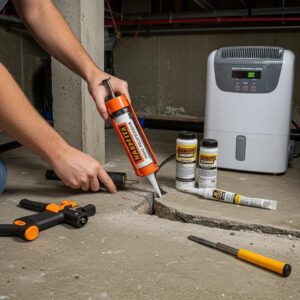
- Identify hairline cracks and apply hydraulic cementfor immediate plugging.
- Inspect plumbing joints and replace corroded fittings to stop seepage.
- Install window well covers and proper flashing around openings.
Resolving these leaksources at their origin prevents moisture accumulation and subsequent moldoutbreaks. Exterior drainagesystems channel wateraway from the foundationto avoid hydrostatic pressure that forces moisture inward.
- Grade landscaping to slope at least 6 inches over the first 10 feet from the foundation.
- Clean gutters and extend downspouts at least 5 feet from basementwalls.
- Install surface drainageswales or drain tiles to direct runoff.
Consistent waterdiversion near the home exterior protects basementwalls and reinforces waterproofingmeasures.
French Drains and Sump Pumps: A Drainage Dream Team
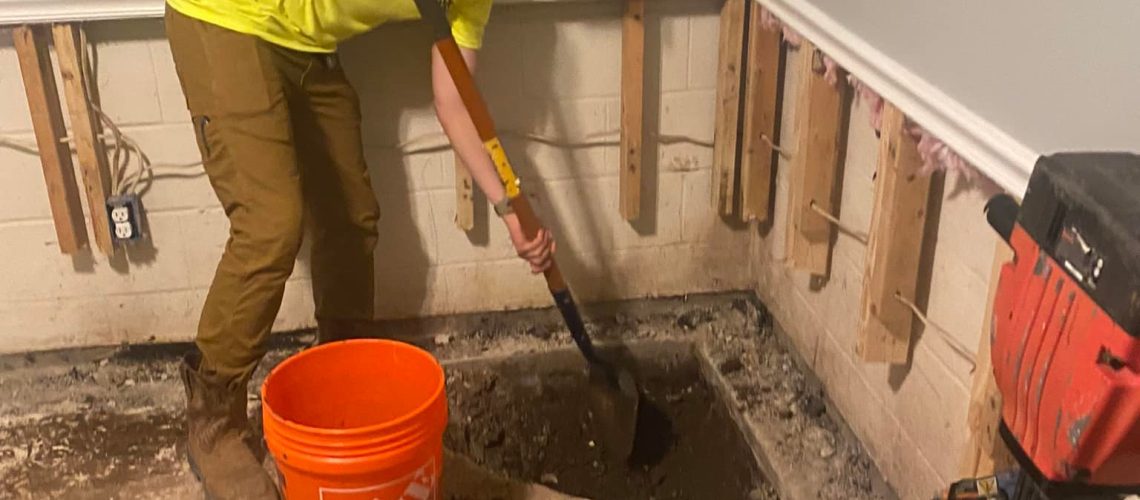
A subsurface French drain channels waterinto a collection pipe, while a sump pump lifts accumulated waterout of the basement, keeping the interior dry. French drains use perforated pipes surrounded by gravel to intercept seepage along the footing.
A sump pit collects waterfrom drains and gravity feeds, where a pump activates at preset waterlevels. They then discharge wateraway from the foundationto prevent re-entry.
Combining both systems diverts subsurface moisture efficiently, halting mold growth at its source.
Vapor Barriers and Insulation
Vapor barriers block moisture migration through walls, and insulation prevents condensationon cold surfaces, both critical for moldprevention.
- Polyethylene sheets affixed directly to concretewalls interrupt vapor diffusion.
- Rigid foam insulation panels provide thermal break to reduce wall surface dew points.
- Foam sealants fill gaps around pipes and joints to eliminate hidden moisture paths.
A continuous barrier system shields interior finishes from humidity fluctuations and condensation-driven mold growth.
Exterior Basement Waterproofing Stop Mold Growth at the Source
Exterior waterproofingstops waterbefore it enters the structure by creating a robust envelope around the foundationthat resists hydrostatic and capillary forces, thereby starving moldof moisture. Excavation exposes foundationwalls so a waterproof membranecan be applied to the exterior, blocking infiltrationunder pressure.
Exterior French drains and foundationdrains capture groundwater before it reaches the wall and direct it to safe discharge points.
- Perforated pipe encased in gravel runs along the footing to intercept subsurface flow.
- Drain tile systems channel collected waterinto sump pits or daylight outlets.
- Foundationdrains integrate with membraneapplications to relieve hydrostatic pressure.
These systems work in tandem with membranes to ensure both surface and subsurface waterdiversion.
How Do You Maintain a Dry, Mold-Free Basement Long-Term?
Sustaining a mold-free basementrequires routine inspection, system upkeep, and data-driven monitoring to catch issues early and reinforce waterproofingmeasures. Consistent upkeep prevents debris buildup and identifies moisture problems before moldcan develop.
- Sweep and vacuum floors to remove dustand organic particles.
- Inspect walls and pipes monthly for signs of leaks or efflorescence.
- Keep storage items off the floor on shelving to promote air circulation.
- Apply mildew-resistant paint to walls as needed to refresh protective coatings.
A structured maintenance schedule preserves the effectiveness of waterproofinginstallations and reduces hidden moldrisks.
Basement waterproofingand moisture management form the cornerstone of moldprevention by removing the conditions fungi need to thrive. Implement these strategies systematically—from identifying moldcauses to applying interior and exterior barriers, leveraging smart technology, and maintaining vigilant monitoring—to ensure your basementremains healthy, dry, and resilient against future moisture threats.
Have You Been Searching For A Professional, Experienced Basement Waterproofing Company In The West Virginia, Pennsylvania, Maryland, Or New Jersey Area? Once & Done Waterproofing Is Here To Help!
You know your basement is in dire need of a waterproofing specialist, but perhaps you’ve been putting it off because you’re concerned about the size, scope and yes, the price of the project. No worries! Once & Done Waterproofing is here to ease your mind.Contact us online or call us directly at 888.589.9651 to schedule your free estimate.
Here at Once & Done Waterproofing Solutions we have vast experience in the installation of the right sump pump for your unique situation. We get it done right the first time so you won’t have to worry about the safety of your home or all of the health risks associated with a damp basement or crawlspace.
With over 40 years of combined field experience we are positive we can solve your crawlspace and basement waterproofing problems for a price that won’t break the bank! We have two offices, one in Martinsburg, WV and one in Allentown, PA that helps us service areas throughout Pennsylvania, West Virginia, Maryland and New Jersey and look forward to helping you.